
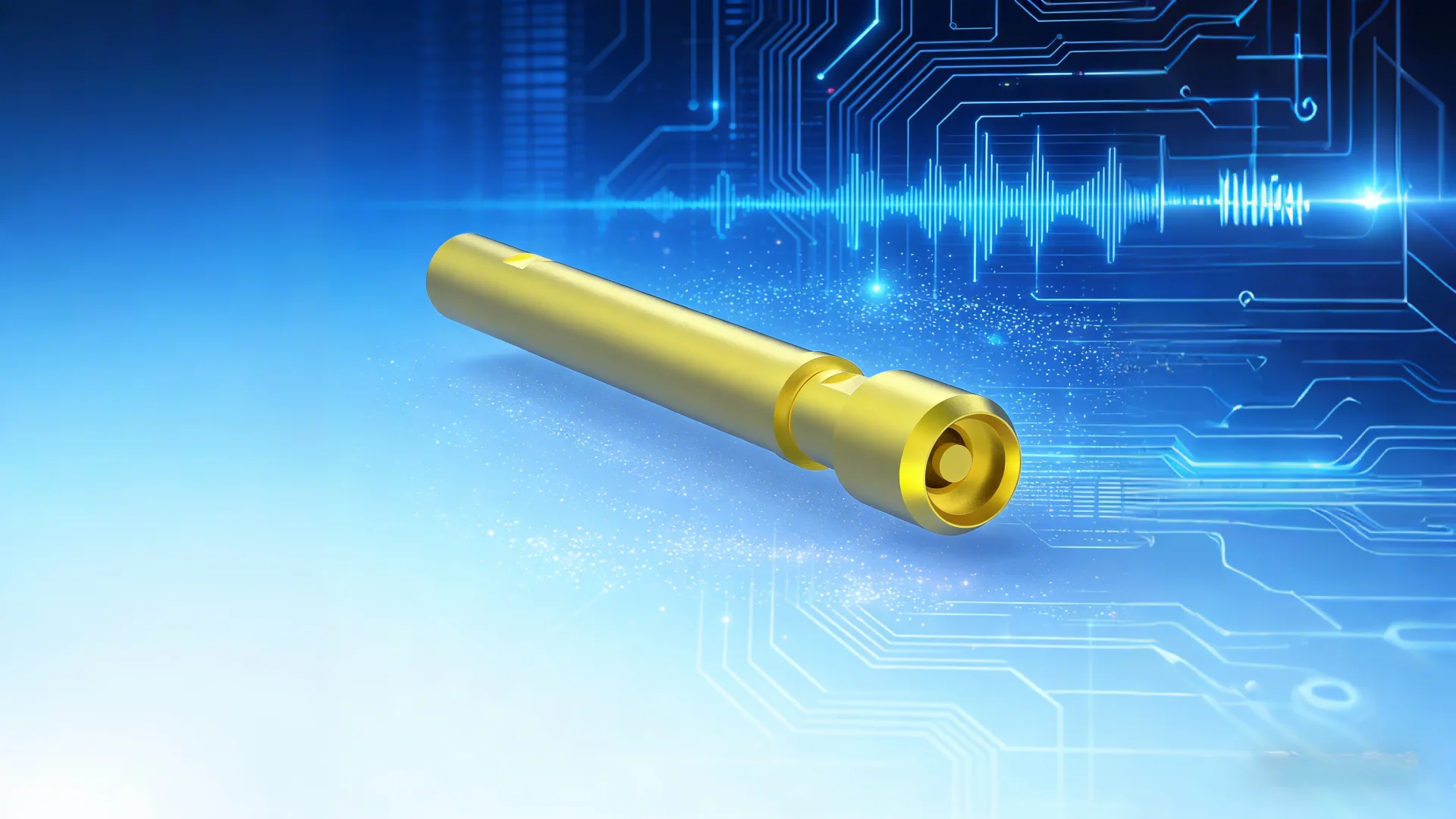
🎯 Making the Right Choice for Special Fakra Testing
For engineers and procurement specialists working with non-standard automotive RF interfaces, selecting the right test probe is more than a purchasing decision—it’s a critical engineering choice that affects data validity, product reliability, and project timelines. The market offers a spectrum of options, from generic probes to highly specialized tools. This guide cuts through the confusion, providing a structured framework for selecting and comparing Special FAKRA RF test probes, with a particular focus on understanding the implications of precision travel specifications like 0.4mm versus more common standards.
Understanding the “Special” in Special FAKRA Connectors
What Defines a “Special” FAKRA Interface?
The term “Special Fakra Connectors” isn’t marketing fluff; it refers to a growing class of RF interfaces in automotive design that deviate from the standardized FAKRA color-coded system. These deviations can include modified keying, unique housing geometries, non-standard locking mechanisms, or altered port depths designed for specific packaging constraints in advanced driver-assistance systems (ADAS), proprietary camera modules, or next-generation telematics units.
A standard probe, built for ubiquitous interfaces, often fails here. It might not mate correctly, could apply excessive force, or may not achieve the proper electrical contact depth, leading to intermittent connections and corrupted S-parameter measurements. A Special FAKRA RF test probe is engineered from the ground up to address these variabilities, with its mechanical design being just as carefully considered as its electrical performance.
The High Stakes of Using the Wrong Probe
The consequences of a probe mismatch extend far beyond a simple connection failure. Using an improperly specified probe can lead to:
False Failures/Passes: Inconsistent contact can cause a good device under test (DUT) to fail validation or, worse, allow a faulty unit to pass, creating quality and reliability risks down the line.
DUT Damage: Excessive spring force or incorrect travel can score plating, deform delicate pins, or crack connector housings on expensive prototypes or production modules.
Measurement Uncertainty: Poor impedance matching at the probe-DUT interface introduces signal reflections, distorting S11/S21 measurements and making true performance characterization impossible.
Project Delays: Discovering probe incompatibility during critical validation phases can halt progress, requiring re-sourcing and re-qualification of test tools.
The Comparison Framework: 5 Dimensions for Evaluation
Choosing between probes requires a holistic, multi-dimensional analysis. Let’s break down the five key areas for direct comparison.
Dimension 1: Electrical Performance – The Foundation
All probes claim good RF performance, but the devil is in the details—specifically, the details across the entire frequency range.
VSWR: The Full-Band Guarantee: A claim of “1.8 max” is meaningless without the context of “DC-6GHz.” For Special FAKRA RF test probes, insist on a guaranteed maximum VSWR across the entire operational band. A probe optimized only at a center frequency (e.g., 2.4 GHz) may show degraded performance at the band edges (e.g., 5.8 GHz), which is unacceptable for wideband automotive applications.
Impedance & Insulation: While 50Ω is a given, the consistency of that impedance through the probe’s mechanical cycle is key. Similarly, high insulation resistance (≥1000 MΩ) is non-negotiable for preventing leakage and ensuring signal isolation in complex electronic assemblies.
Dimension 2: Mechanical Precision – Where 0.4mm Makes its Case
This is the heart of the “0.4mm vs Standard” comparison. Mechanical specs are not just about durability; they are about precision and protection.
Travel Specifications: The Critical Comparison:
Standard Travel (e.g., 2.0mm): Suitable for robust, standardized ports. It offers a good balance of contact reliability and forgiveness for minor misalignment.
Precision Travel (e.g., 0.4mm): Engineered for delicate, shallow, or tightly toleranced Special Fakra Connectors. This minimal travel minimizes bending moment on the DUT’s solder joints, prevents over-compression of the probe’s own spring, and is often used when the connector’s own mating depth is limited.
Spring Force in Tandem: Travel is meaningless without its corresponding force. A 0.4mm travel probe typically employs a lighter, more calibrated spring force (e.g., 80g ±20%). This combination ensures a reliable electrical connection—achieving the required gas-tight interface—without acting like a miniature press on your DUT. Compare this to a standard probe which might use 100g or more over a longer travel.
💡 Pro Tip
Always pay more attention to the recommended travel than the maximum travel. The recommended travel is the sweet spot engineered for optimal electrical contact and mechanical longevity. Operating at the maximum travel consistently will accelerate wear on both the probe and your connectors.
Dimension 3: Interface Compatibility & Physical Fit
A perfect electrical and mechanical probe is useless if it doesn’t physically connect to your system.
DUT Interface: This must exactly match the “special” connector you are testing—its gender, keying, and housing profile.
Cable Interface (e.g., MCX Female): Must be compatible with your existing test station cabling. Consider the robustness of this connection; a threaded interface may be preferable for semi-permanent setups over a snap-on type.
Current Rating: Verify both inner conductor (e.g., 3A) and outer conductor (e.g., 10A) ratings if your test involves power-over-coax or active device testing.
| Parameter | Typical “Standard” Probe | Specialized Precision Probe (e.g., 0.4mm) | Why It Matters for Special Fakra |
|---|---|---|---|
| Recommended Travel | 2.0 mm | 0.4 mm | Prevents over-insertion and damage to shallow, delicate, or non-standard ports. |
| Spring Force @ Travel | ~100g @ 2.0mm | ~80g @ 0.4mm | Lighter, calibrated force protects connector integrity while ensuring contact. |
| VSWR (DC-6GHz) | ≤ 1.8:1 (May vary across band) | ≤ 1.8:1 (Optimized across full band) | Ensures consistent measurement accuracy for all automotive frequencies (GPS, 5G, Radar). |
| Construction Focus | General durability | Precision alignment & contact | Critical for maintaining signal integrity with non-standard mechanical interfaces. |
| Typical Cost Driver | Volume, material cost | Precision machining, calibration | Reflects the engineering effort required for specialized applications. |
Dimension 4: Smart Features for Long-Term Value
Total Cost of Testing (TCT) is a more important metric than unit price. Features that extend service life directly lower TCT.
Replaceable Pin (Tip): This is a hallmark of a well-designed probe. When the gold-plated contact eventually wears, you replace a $10-20 pin, not a $200+ probe. For high-cycle production testing, this feature alone can justify a higher initial cost.
Durability (10,000 cycles): Ensure this rating is for the entire assembly with a replaceable pin. It speaks to the quality of the internal spring and bearing surfaces.
Consistency: In production, you need multiple probes to behave identically. Look for suppliers that can demonstrate tight tolerances on electrical and mechanical specs across units.
Dimension 5: Supplier Evaluation – The Human Factor
The company behind the probe matters as much as the product itself.
Technical Dialogue: Can they discuss why they chose a 0.4mm travel and 80g force for a given application? Do they understand the trade-offs?
Sample Policy: A confident supplier will often provide a sample for evaluation. This is the best way to test fit, feel, and function.
Customization Capability: If their “special” probe isn’t quite right for your “special” connector, will they engineer a solution? This leads to a critical advantage: leading suppliers often support custom designs with a minimum order quantity of just 1 piece, accepting global orders for tailored solutions.
Application Scenarios: Making the Final Choice
The optimal choice becomes clear when mapped to specific use cases.
| Application Scenario | Recommended Probe Type | Key Decision Drivers |
|---|---|---|
| R&D on Novel/Proprietary Connectors | Specialized Precision Probe (0.4mm-type) | Demands exact physical fit, gentle handling of prototypes, and lab-grade signal integrity. Custom designs are often explored here. |
| High-Volume Production of Standard FAKRA Devices | Standard Probe (2.0mm-type) | Prioritizes durability, cost-per-cycle, and consistency across hundreds of units. The interface is well-defined and robust. |
| Validation & Reliability Testing (Environmental Chambers) | Specialized Precision Probe | Requires performance stability across temperature extremes (-55°C to +85°C) and precise contact despite material expansion/contraction. |
| Field Service & Diagnostics | Depends on Portfolio | Often needs a rugged probe. If diagnosing special connectors, a precision probe is necessary, prioritizing portability and robustness. |
Conclusion: It’s an Engineering Decision, Not Just a Purchase
The choice between a standard and a specialized Special FAKRA RF test probe boils down to a simple question: Are you testing a standard interface or a special one? For standardized ports, a robust, cost-effective 2.0mm-travel probe is likely sufficient. However, for the growing world of non-standard, delicate, or proprietary automotive FAKRA variants, the precision, protection, and guaranteed performance of a 0.4mm-class probe are not luxuries—they are necessities for obtaining valid data and protecting valuable hardware.
The most sophisticated tool is worthless without access. This is why the modern engineering landscape values suppliers who demystify the process and lower barriers to innovation. The most forward-thinking manufacturers now offer unparalleled flexibility, understanding that groundbreaking work often starts with a single unit. They enable projects of all scales by supporting custom engineering with a 1-piece minimum order quantity and welcoming global collaboration, ensuring that the right specialized tool is accessible for every unique challenge, not just mass production.
💡 Your Comparison Checklist
Before deciding, ask: 1) Does the VSWR guarantee cover my exact frequency needs? 2) Does the mechanical travel/force match my DUT’s sensitivity? 3) Is the physical interface a perfect match? 4) Will features like a replaceable pin lower my 2-year TCT? 5) Can the supplier support me technically and accommodate low-volume or custom needs?
Ready to Find Your Precision Match?
Explore our range of specialized FAKRA RF test probes, engineered for accuracy and connector protection. Download detailed specs or contact our engineering team for a consultation on standard or custom solutions.
Email Our Sales Team