
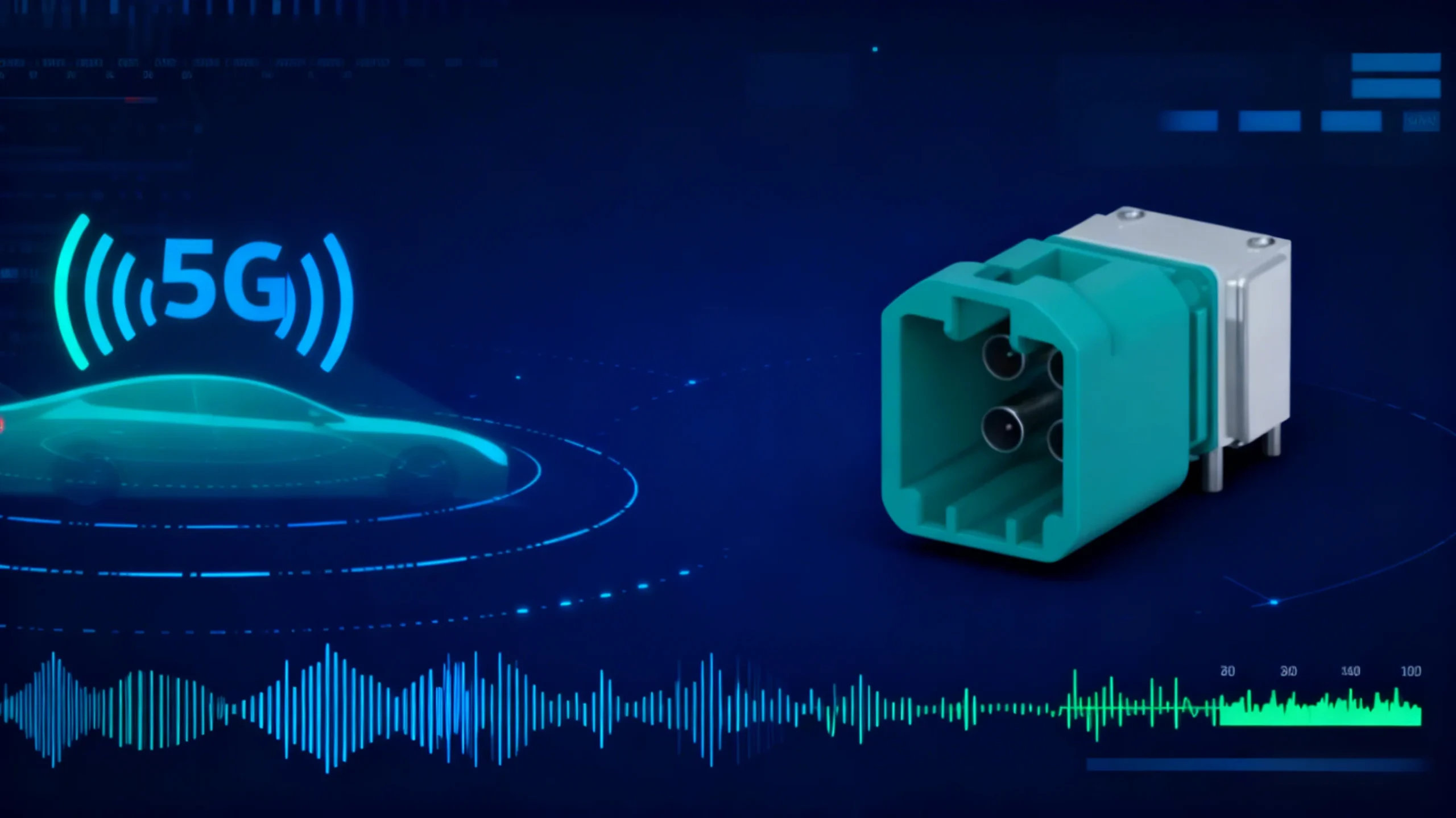
📡 High-Frequency Test System Key Points
Understanding PA Test Requirements for Modern Applications
The evolution towards 5G millimeter-wave and automotive radar systems has fundamentally changed power amplifier validation methodologies. Where traditional cellular PA testing focused primarily on efficiency and linearity at sub-6 GHz frequencies, today’s requirements demand simultaneous characterization across wider bandwidths, higher frequencies, and more complex modulation schemes. This paradigm shift necessitates a reevaluation of test module selection criteria.
RF power amplifier test modules now serve as the critical bridge between the device under test and measurement instrumentation. Their performance directly determines the accuracy of load pull measurements, ACPR characterization, and EVM validation—particularly challenging when evaluating 5G NR waveforms with 400 MHz bandwidth or FM-CW radar signals with precise linearity requirements.
Critical Specifications for 5G NR Power Amplifier Testing
Frequency Range and Instantaneous Bandwidth
5G NR FR2 operation at 24-40 GHz presents unique challenges for test module design. Unlike sub-6 GHz systems where a single module might cover multiple bands, millimeter-wave testing often requires specialized modules for each frequency range. The instantaneous bandwidth requirement proves equally important—while 5G NR carriers typically occupy 100-400 MHz, characterization of digital pre-distortion algorithms may require capturing third or fifth order intermodulation products, effectively tripling the necessary capture bandwidth.
Selection Criteria: For 5G NR PA testing, prioritize modules supporting minimum 400 MHz instantaneous bandwidth at your target frequency. Verify that the test modules maintain flat frequency response (±1 dB) and consistent group delay across this bandwidth to prevent waveform distortion during EVM measurements.
| Parameter | 5G NR FR2 Requirement | Automotive Radar Requirement | Test Standard |
|---|---|---|---|
| Frequency Range | 24-29 GHz, 37-40 GHz | 76-81 GHz | 3GPP 38.101, ETSI EN 302 264 |
| Instantaneous Bandwidth | ≥ 400 MHz | ≥ 1 GHz (FM-CW) | 3GPP 38.141 |
| Power Handling (CW) | +20 dBm typical | +15 dBm typical | IEC 60115 |
| VSWR | < 1.5:1 | < 1.8:1 | MIL-STD-348 |
| Noise Figure | < 8 dB | < 12 dB | IEEE 1650 |
💡 Design Insight
For 5G massive MIMO PA testing, ensure the test module supports simultaneous multi-port operation. This eliminates sequential measurements that miss beamforming interaction effects between array elements.
Automotive Radar PA Testing Considerations
Phase Coherence and Thermal Stability
Automotive radar systems operating at 77-81 GHz rely on precise phase relationships across multiple channels for accurate object detection and angle-of-arrival determination. Unlike 5G PA testing which prioritizes wide bandwidth, radar applications demand exceptional phase stability across temperature variations. Test modules must maintain consistent electrical length as internal temperatures fluctuate during extended measurement sessions—a particular challenge in production test environments where thermal conditions vary significantly.
Phase coherence requirements typically specify less than 2° phase variation between channels across a 20°C temperature range. This level of stability ensures that calibration remains valid throughout production testing cycles, preventing false failures that increase manufacturing costs.
Selection Criteria: Prioritize test modules with built-in temperature compensation and symmetric RF paths. Verify manufacturer specifications for phase variation versus temperature, ideally demonstrated through empirical data rather than simulation results alone.
What is the minimum order quantity for your test modules?
admin2025-11-11T13:30:57+08:00REECUFUTURE proudly supports a minimum order quantity of just 1 unit for all our test modules. This policy applies to both our standard catalog products and fully customized solutions, enabling us to serve prototyping and low-volume production needs effectively.
What are the main application areas for your test modules?
admin2025-11-11T13:38:59+08:00Our comprehensive range of test modules serves diverse testing applications across multiple industries. These include semiconductor wafer validation, high-frequency RF component testing, and PCB in-circuit functional verification, providing reliable solutions from R&D labs to production floors.
What is the typical lead time for standard test modules?
admin2025-11-11T13:40:40+08:00For standard test modules configurations, our typical production lead time ranges from 2 to 3 weeks. This efficient turnaround applies even to single-unit orders, ensuring you receive your required test modules promptly to maintain your project development schedule.
What quality assurance measures do you implement for test modules?
admin2025-11-11T13:43:10+08:00Every test module undergoes comprehensive quality validation, including impedance matching verification, signal integrity analysis, and mechanical cycle life testing. This rigorous process ensures all delivered test modules meet our strict performance and reliability standards.
Can you customize test modules for specific testing requirements?
admin2025-11-11T13:42:02+08:00We specialize in developing custom test modules tailored to unique application needs. Our engineering team can modify probe configurations, interface types, and performance specifications to create bespoke solutions that address your specific device validation challenges.
What technical support do you provide for test modules integration?
admin2025-11-11T13:44:04+08:00We offer complete technical support throughout the integration process. Our engineering team provides detailed application guidance, performance optimization advice, and troubleshooting assistance to ensure successful implementation of your test modules in various testing environments.
| Application Scenario | Critical Parameters | Recommended Module Features | Validation Methodology |
|---|---|---|---|
| 5G NR FR2 PA Characterization | EVM (< 3%), ACPR, power-added efficiency | Wideband vector receivers, integrated signal analyzers | Modulated waveform testing with 400 MHz 5G NR signals |
| Automotive LRR Radar PA | Phase noise, FM-CW linearity, output power stability | Phase-coherent sources, low-VSWR interfaces | CW and modulated radar signal analysis per ISO 16505 |
| Production PA Testing | Test time, yield analysis, cost of test | Multi-DUT capability, automated calibration | Statistical process control with correlation to golden units |
| R&D Prototype Validation | Design margin, failure analysis, model correlation | High dynamic range, precision measurement capability | Load pull, waveform capture, thermal characterization |
System Integration and Calibration Approaches
Modular Architecture versus Integrated Solutions
The choice between building a test system from discrete instruments versus implementing an integrated test module involves significant tradeoffs. Discrete solutions offer flexibility in component selection but introduce calibration complexity and potential interoperability issues. Integrated modules provide optimized performance for specific applications but may lack the configurability needed for research environments with frequently changing requirements.
Modern semiconductor test challenges increasingly favor integrated approaches, particularly for 5G and automotive radar applications where signal integrity at millimeter-wave frequencies demands carefully controlled impedance matching throughout the signal path. The calibration time savings alone often justify integrated solutions in production environments—where reducing test time directly impacts manufacturing costs.
Implementation Strategy: For high-volume production, lean toward application-specific integrated modules. For research and development environments, consider modular architectures based on PXIe or AXIe platforms that balance performance with reconfigurability.
💡 Pro Tip
Implement regular system verification using known reference devices rather than full recalibration. This reduces downtime by 60% while maintaining measurement confidence between formal calibrations.
Thermal Management in High-Power Testing
Power amplifiers for 5G and automotive applications increasingly operate at higher power densities, creating thermal challenges for test systems. During load pull characterization or continuous wave testing, the RF test modules must dissipate significant thermal energy without performance degradation. Inadequate thermal design manifests as measurement drift—particularly problematic for power-added efficiency calculations that require stable performance over extended measurement cycles.
Advanced thermal management approaches include active cooling systems, thermal shut-down protection, and temperature-compensated calibration algorithms. Each approach involves tradeoffs between system complexity, measurement stability, and module longevity.
Selection Criteria: Evaluate test module thermal specifications including operating temperature range, thermal resistance metrics, and documented performance stability during extended high-power operation. For production environments, prioritize modules with overtemperature protection to prevent damage during unexpected test conditions.

Cost Optimization Through Strategic Test Module Selection
The total cost of test ownership extends far beyond initial hardware acquisition. For power amplifier testing, the dominant costs often include calibration expenses, measurement uncertainty (yield loss), and test time. Strategic test module selection addresses each of these cost drivers through optimized architecture choices.
Integrated test modules typically demonstrate 30-40% lower total cost of ownership over three-year operational periods compared to discrete solutions—primarily through reduced calibration requirements and faster test execution. The value proposition becomes particularly compelling in high-mix production environments where quick changeover between device types is essential.
Financial Justification: When evaluating test module alternatives, develop a comprehensive cost model that includes calibration intervals, mean time between failures, software integration effort, and expected test time differences. This holistic analysis frequently reveals that higher initial acquisition costs are offset by operational savings within 12-18 months.
💡 Budget Strategy
Consider leasing specialized test modules for low-volume applications. This provides access to advanced measurement capabilities without capital investment, particularly valuable for emerging technologies like 6G research.
Need Expert Guidance on PA Test Module Selection?
Our engineering team specializes in optimizing RF test configurations for 5G and automotive radar applications. Contact us for a complimentary system analysis and recommendation tailored to your specific device requirements and production volumes.
Email Our Sales Team